













22 Best Baby Keepsake Boxes and Memory Boxes (2026)
 Updated
22 min read
Updated
22 min read
A baby keepsake box works best when you treat it as a short list, not storage. Pick eight to fifteen things that carry a story, put them somewhere safe, and stop. The parents who end up with a box worth opening in twenty years are the ones who left things out.
Below are 22 boxes we would actually buy, from a $39.99 engraved pine box to a hard-sided heirloom trunk. Underneath them is the part almost nobody writes down: how to store a lock of hair, a hospital bracelet and an ultrasound print so they still exist in thirty years. Wood is acidic, and most keepsakes are put straight onto bare wood. That one detail causes more damage than anything else on this page.
Start here: the five we recommend most
- Personalized Baby Keepsake Box, from $44.99. Best overall, solid wood with internal locking hinges.
- Personalized Newborn Keepsake Box, from $44.99. Best for hospital keepsakes, comes in white.
- Black box with compartments and a drawer, under $40. Best if you hate a jumbled box.
- Sentimental Moments Keepsake Box, $39.99. Best under $40, no baby motif to outgrow.
- Solid walnut Personalized Memory Box, $99.99. Best large box for folded clothing.
- What to put in it
- What to leave out
- How to preserve each item
- What never goes in
- Where to keep the box
- The 26 boxes
- How to choose
- After a loss
- FAQ
What to put in a baby keepsake box
Almost every parent saves the same ten things, and they are the right ten. Start here, then add from the second list only if the item genuinely carries a memory you can still tell.
If you are hunting for baby keepsake box ideas rather than a box, this is the section you want. Everything below works whether your box is an engraved wooden chest, a fabric-lined trunk, or one of the keepsake boxes and tins sold as a starter kit.
The ten most people keep
- Hospital ID bracelets, baby's and mom's, plus the bassinet name card.
- A lock of hair from the first haircut.
- The coming-home outfit, one garment, not five.
- One ultrasound print, your favourite. Scan it first. See below for why.
- First shoes or booties.
- Hand and footprints, in ink, plaster or salt dough.
- The birth announcement, one clean copy.
- The first tooth, dried and in its own small container.
- Cards from the birth, the shower or the christening. Keep the handwritten ones.
- A few milestone photos from the first year, with the date written on the back in pencil.
Worth adding, and more personal than the standard list
- A letter you write to the baby on the day they are born, sealed and marked to be opened at eighteen. Parents who do this say it is the item their child cares about most.
- The front page of a newspaper from the birth date, and coins minted that year.
- The first pacifier, rattle, or whatever toy came home from the hospital.
- A cut square of the blanket that got loved to pieces, once it is genuinely finished.
- The positive pregnancy test, if that is a moment you want to keep.
- The newborn hat from the hospital, which is usually the only thing that still smells like those first days.
Things to add as they grow
A box that closes at the end of the first year gets opened once. A box that stays open for eighteen years becomes the thing they take with them, and every year adds a treasure that costs nothing.
- The first drawing that was recognisably of something.
- The first day of school photo and the first report card.
- A medal from a first team, or the program from a first school play.
- Letters you write for future birthdays, one per milestone year.
One box per child, or one for the family?
One per child. Shared boxes get untangled eventually, usually by the children themselves, and by then nobody remembers whose hospital bracelet is whose. Label everything with a name and a date even inside a single-child box.
What to leave out, and what to photograph instead
The failure mode is not losing things. It is keeping so much that the treasure chest turns into a container of unlabelled objects nobody can interpret. If you cannot say in one sentence why an item matters, it goes.
- Duplicate cards and paperwork. Keep the one with the handwriting you want to see again.
- Extra outfits. One garment tells the story. Photograph the rest folded, then donate them.
- Bulky gear. Bottles, monitors, the swing. Photograph it with the baby in it, which is the memory anyway.
- Anything damp, stained or food-adjacent. Milk and juice sugars caramelize invisibly and turn brown years later.
- Items whose story you have already forgotten. That is the honest test, and it is quick.
There is one exception worth naming. An item tied to a painful memory is not the same as an item you are sad about. Keep the second. You do not owe the box the first.
How to preserve each item so it survives thirty years
This is where most keepsake advice stops at "use acid-free" and leaves out the part that matters. Acid-free is not one thing. Buffered paper carries an alkaline reserve, usually calcium carbonate, that neutralizes acid as it forms. That is right for paper, cotton and linen. Protein materials are different, and hair, wool, silk and leather are all protein. Conservation suppliers advise storing those in unbuffered materials instead, so a lock of baby hair should not go straight into buffered tissue.
The other thing nobody selling a wooden box tends to mention: wood is acidic. The North Carolina Museum of History says it plainly, that textiles should not sit in direct contact with wood because the acid in it makes them yellow. That is not a reason to skip a beautiful engraved box. It is a reason to never let anything touch the bare interior. Line it with acid-free tissue and put each item in its own enclosure.
| Item | Store it in | The mistake to avoid |
|---|---|---|
| Hospital bracelet | Polyester (Mylar) sleeve or an unbuffered acid-free envelope | Taping it to a page, or letting the plastic press against fabric |
| Lock of hair | Tied with cotton thread, wrapped in unbuffered tissue, then an unbuffered acid-free envelope | Buffered tissue, tape, glue, or a rubber band. Hair is protein |
| Ultrasound print | Scan it first, then an archival photo sleeve, kept dark | Hot lamination. Heat is exactly what thermal paper reacts to, so it darkens the sheet |
| Coming-home outfit | Washed, fully dry, folds padded with acid-free tissue, in a breathable box | Airtight bags and plastic totes. Trapped moisture and plasticizers both attack fibres |
| First shoes | Cleaned, dried, lightly stuffed with tissue to hold shape | Sealing leather in plastic, or storing it against buffered paper |
| Baby teeth | Cleaned, bone dry, in a small airtight vial with a silica packet | Any residual moisture. Damp teeth mould inside a closed box |
| Umbilical cord stump | Fully air-dried first, then a small breathable unbuffered acid-free envelope | Sealing it before it is completely dry, or adding powders and oils |
| Cards and newsprint | Buffered acid-free folders. Photocopy newspaper onto acid-free stock | Newsprint is the most acidic thing in the box and it stains its neighbours |
| Photos | Enclosures that pass the Photographic Activity Test. Date them in pencil on the back | Magnetic self-stick albums, and ballpoint on the front |
| Salt dough prints | Sealed, stored flat, away from fabric | Leaving it unsealed. It draws moisture, softens and can mould |
If you do only one thing, scan the ultrasound
Ultrasound prints are thermal paper, the same stock as a shop receipt. Heat, light and humidity fade them, and a faded one cannot be brought back. Scan yours at high resolution on a real scanner, not a phone, and keep the file somewhere you back up. It is the highest-regret item in the whole box and it costs you ten minutes.
Sources: enclosures, temperature and humidity from the National Archives on storing family papers and photographs and NEDCC leaflet 4.4. Buffered versus unbuffered from Gaylord Archival. Textiles and wood contact from the North Carolina Museum of History. The cord-stump timing and the advice against powders and oils come from Mayo Clinic guidance on newborn cord care, which covers caring for the stump on the baby rather than keeping one, so the storage suggestion is ours.
What should never go in the box
These are the materials that quietly destroy the things around them. The National Archives names most of them by name.
- Pressure-sensitive tape of any kind, including the tape holding a card shut.
- White glue, hot glue and rubber cement.
- Magnetic self-stick photo albums. The adhesive migrates into the print.
- Rubber bands, paper clips and non-stainless staples. Rubber perishes and metal rusts into paper.
- Unknown plastics and PVC. Only polyester, polypropylene and polyethylene are safe.
- Anything still damp. One damp item is enough to mould a closed box.
Where to keep the box
Every competitor says cool, dry and dark. Here are the actual numbers.
- Below 75°F. Cooler slows chemical decay and discourages insects.
- Relative humidity under 65% and above 15%. Too damp and it moulds. Too dry and paper and fabric go brittle.
- Textiles are fussier. Aim for 68 to 75°F and 40 to 57% humidity for a stored garment.
- Out of direct sun. Light fades ink and photographs permanently.
In practice that rules out the three places most people reach for first. An attic cooks in summer, a garage swings with the weather, and a basement is the damp one. An interior closet shelf is the right answer in most homes. Keep it away from exterior walls, windows, radiators and anywhere a pipe runs.
The 22 best baby keepsake boxes
Nine of these are ours and thirteen are not. We have kept the outside picks because our own range does not cover everything a parent might want, and a guide that only sells you its own shelf is not a guide. Prices for our boxes are current. For everything else we have given a band rather than a number, because outside prices move.
1. Personalized Baby Keepsake Box
Best overall · from $44.99 · Groovy Girl Gifts

A teddy bear holding a MEMORY BOX banner inside a laurel wreath, with baby's name above and the birth date below. Your own message goes inside the lid. Solid wood in cherry, burl or black, or a soft white finish, with internal locking hinges and a Spanish cedar lining.
2. Personalized Newborn Keepsake Box
Best for the hospital keepsakes · from $44.99 · Groovy Girl Gifts

Tiny footprints climbing over a sunrise, with the name and birth date beneath. It comes in white as well as cherry, burl and black, so it suits a nursery shelf. At 9 by 8.5 inches it takes a hospital bracelet, a bassinet card and a folded first hat without forcing a crease into anything.
3. Conscious Mom Bamboo Keepsake Box Set
Best all-in-one starter set · Under $40 · Amazon

Bamboo, with a photo window in the lid, a tray of small compartments and a pull-out drawer underneath. It ships with an ink pad, milestone discs and drawstring bags, so a parent who has no idea where to start gets a structure rather than an empty box. The compartments are the reason to pick it.
4. Safari Birth Statistics Keepsake Box
Best for the birth statistics · $40 to $100 · Etsy

The full birth record is engraved and painted straight onto the lid: name, day of the week, time, weight, length and city, framed by safari animals. If you want the stats readable without opening anything, this is the cleanest version of that idea we found.
5. Black Wooden Keepsake Box with Labelled Compartments
Best with compartments · Under $40 · Amazon

Eight compartments, each engraved with what belongs in it: first tooth, first curl, first pacifier, hospital bracelet, newborn outfit, first shoes. A photo panel sits in the lid. This is the answer to the most common complaint about baby boxes, which is that everything slides into one heap, and the labels mean somebody else can keep it going.
6. Sentimental Moments Custom Keepsake Box
Best under $40 · $39.99 · Groovy Girl Gifts

Light pine with a wildflower meadow across the front and any name or short line you choose above it. There is no baby motif at all, which is deliberate: it reads as a keepsake box first, so it still looks right on a shelf when the baby is twenty. Our least expensive engraved box.
7. Safari Animal Personalized Memory Chest
Best nursery-themed box · Under $40 · Etsy

A painted safari truck carrying a giraffe, an elephant and a lion, with a leopard and a gorilla alongside it and bunting overhead, personalized with the name and dates. It is the most nursery-looking box on this list, which is either exactly what you want or exactly what you do not. Choose it if the box is going to live in the room, not a closet.
8. Navy Blue Keepsake Trunk
Best trunk with a built-in organizer · $100 and up · Etsy

A hard-sided navy trunk with a carry handle, metal latches and an elastic organizer panel in the lid. The organizer is the reason to pick it, because it holds the small flat things where you can see them instead of letting them sink to the bottom under a folded blanket.
9. Kid’s Memory Box
Best to grow with them · $44.99 · Groovy Guy Gifts

An animal train carrying a bear, a rabbit, a giraffe and a duck, the child's name in block capitals above and MEMORY BOX spelled out in wooden blocks below. Built for the years after the newborn ones: the first drawing, the lost tooth, the school photo, the ticket stub.
10. Vintage Suitcase Keepsake Case
Best heirloom suitcase · $40 to $100 · Etsy

A sage green vintage-style case with cream corner trim and a round personalized name plaque on the lid. It is a genuine suitcase shape, so it stacks and carries, and nothing about it reads as baby-only. Worth noting the listing is titled emerald green while the photographed finish is closer to sage, so check the colour chart before you order.
11. Personalized Memory Box
Best large box · from $99.99 · Groovy Guy Gifts

Solid walnut, no plywood or veneer, black felt lined, in a medium 7 by 5 inch or a large 9.5 by 7 inch, with twenty engraving styles. The large is the one to buy if you already know a folded outfit or a plaster cast is going in, because those are what defeat a shallow box.
12. Large Sliding-Lid Maple Keepsake Box
Best sliding-lid box · $100 and up · Etsy

Pale maple with a sliding lid rather than hinges, engraved with names and a date on the front edge. The sliding lid is the practical advantage here, because there is no hinge to sag and nothing to catch a piece of paper when it closes. It is the largest simple box on the list.
13. Family Tree Customized Keepsake Box
Best family heirloom · $54.99 · Groovy Girl Gifts

A laser-engraved family tree that holds up to sixteen names in the leaves, on a white, cherry or teal box with a Spanish cedar lining and internal locking hinges. The right pick for a grandparent who wants one box for all the grandchildren rather than one per child.
14. Butterfly and Rose Decorative Trunk
Best decorative trunk · Under $40 · Amazon

A small trunk with a flat rounded lid in a butterfly and rose print with a carry handle and a front latch. It is decorative rather than archival, so treat it as the display piece and keep anything delicate inside it in a sleeve. Good value and it looks far more expensive than it is.
15. Personalized Tooth Fairy Keepsake Box
Best for first teeth · $44.99 · Groovy Girl Gifts

A Tooth Fairy Express mailbox with a winged tooth flying out of it, personalized with the child's name. One caution that applies to any tooth box: teeth have to be bone dry and in their own small container before they go in, or they mould. The preservation table below explains why.
16. Minimal Engraved Birth Detail Box
Best simple engraved box · Under $40 · Etsy
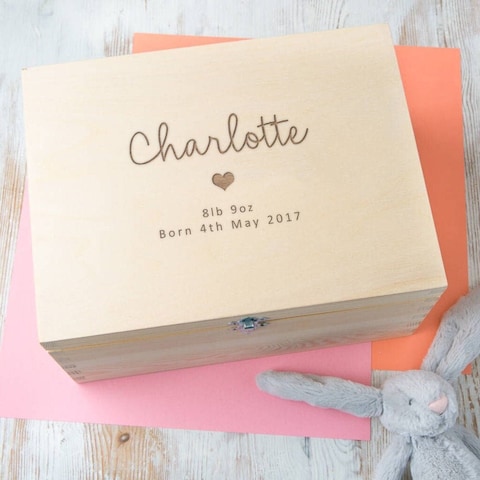
Plain light wood, a name in script, a small heart, and the birth weight and date underneath. Nothing else. If every other box on this list feels like too much, this is the restrained one, and restraint ages better than a cartoon animal.
17. Benicci Baby Memory Box Kit
Best complete kit · Under $40 · Benicci

A white lidded box that arrives already filled with labelled muslin bags, envelopes, milestone discs and prompt cards. The kit is the product. Someone who wants to be told what to save and where to put it will get further with this than with a beautiful empty box.
18. First Father's Day Keepsake Box
Best for a new dad · $44.99 · Groovy Guy Gifts

A father's hand holding a newborn's hand, with DAD and the year engraved on the wristbands like hospital bracelets, signed from the baby. It is the rare new-dad gift that is not a mug, and it gives him somewhere to put the ultrasound print that has been living in his wallet.
19. Oaktree Gifts Blue Elephant Keepsake Box
Best for a baby boy · Under $40 · Amazon

Distressed pale wood with a raised blue elephant on the lid and MY SPECIAL KEEPSAKES above it, finished with a small ribbon tag. Sold as a boy's box and the palette commits to that, so buy it knowing it will not suit a sibling later.
20. Fairytale Book-Style Keepsake Box
Best book-style box · Under $40 · Amazon

Shaped and printed like a storybook, in pink with a ribbon tie, reading our fairytale came true on the day we had you. It shelves upright between actual books, which is a genuinely useful property if you have no spare surface. Card construction, so keep it dry.
21. Engraved Floral Birth Memory Box
Best minimalist engraved lid · $40 to $100 · Etsy

Light wood with a fine floral engraving covering most of the lid and the birth details worked into it. Size and colour are both configurable, which matters more than it sounds, because the standard shallow box is the usual regret.
22. Personalized Baby Keepsake Sign
Best keepsake to pair with a box · $49.99 · Groovy Girl Gifts

Not a box, and here because a keepsake box hides everything inside it. This backlit plaque puts the name, date, time, weight, length and birthplace beside the newborn photo, so the stats stay visible and the box holds the objects. The two work better together than either alone.
How to choose a baby keepsake box
Measure your biggest keepsake first
This is the single most useful thing on this page and it takes two minutes. Lay out the largest thing you plan to keep, usually the coming-home outfit folded once or a pair of first shoes, and measure it. Most disappointment with keepsake boxes is a depth problem. A 9 by 8.5 inch box with two and a quarter inches of depth handles paper, bracelets, hair and a hat comfortably. Folded clothing and plaster casts need a deeper box or a trunk.
Open cavity, or compartments
An open box suits paper, photographs and a folded garment. Compartments suit the small things, and the small things are the ones that get lost. A first tooth in an open box migrates under a blanket within a year. If your list is mostly tiny objects, pick a compartment box like number 6 or a case with dedicated slots like number 24.
Wood, and what lining to look for
Solid wood outlasts card and MDF, and it takes engraving properly. Look for a lined interior rather than bare wood. Spanish cedar linings, which several of our boxes have, give you a finished surface and a good smell. Whatever the lining, still put an acid-free tissue layer between the wood and your keepsakes.
Themed, or neutral
A safari truck or a blue elephant looks wonderful in a nursery and dates fast. A name and a date on plain wood does not. Our own advice is to buy the neutral box if it is going on a shelf for decades, and the themed one if it is going to live in the room while the baby is small. Neither is wrong. Just decide which job it is doing.
Personalization is what makes it a keepsake
A plain box is a container. A box with the baby's name, the birth date and a message from you engraved inside the lid is the keepsake itself, and it is the part your child will read first when they open it as an adult. Every box we make is engraved free, and the message inside the lid is the one people tell us they did not expect to care about.
A memory box after a pregnancy or infant loss
Some people reading this are not shopping for a birth. If that is you, we are sorry, and this section is written for you rather than around you.
A memory box after a loss holds the same kinds of things: the ultrasound, the hospital band, the cards, a hat or blanket, a name written down. There is no schedule for assembling it and no requirement to. Some parents fill one within days. Some leave it empty for years and are glad it was there. Both are normal.
If you are buying this for someone else, give it quietly and without instructions about when or whether to use it. Charities such as Still Remembered provide memory boxes to families through hospitals, and hospital bereavement teams can usually point you to local support.
Miscarriage Memory Box
For a pregnancy or infant loss · $44.99 · Groovy Guy Gifts

Two small footprints between angel wings beneath a halo, with the baby's name and date, and a message engraved inside the lid. Somewhere to keep the ultrasound, the hospital band and the cards. If you are buying it for someone else, give it without any suggestion about when or whether they should use it.
Baby keepsake box FAQ
What do you put in a baby keepsake box?
The ten most parents keep are the hospital bracelets, a lock of hair from the first haircut, the coming-home outfit, one ultrasound print, first shoes, hand and footprints, the birth announcement, the first tooth, a few handwritten cards, and dated milestone photos. Add a letter written to the baby on their birth date if you want one item they will care about more than the rest.
How many things should I keep in it?
Eight to fifteen. Past that a keepsake box becomes storage, and the point of the box is that everything in it carries a story you can still tell. If you cannot say why an item matters in one sentence, leave it out.
How big should a baby keepsake box be?
Measure your largest keepsake before you buy. A box around 9 by 8.5 inches with a couple of inches of depth handles bracelets, paper, hair, a hat and photographs. Folded clothing, plaster casts and first shoes stored upright need a deeper box or a trunk.
Is a wooden keepsake box safe for baby clothes?
Yes, as long as nothing touches the bare wood. Wood is acidic, and museum textile guidance is that fabric in direct contact with wood yellows over time. Line the box with acid-free tissue, wrap the garment in unbuffered tissue if it is silk or wool, and it will be fine for decades.
Do ultrasound pictures fade?
Yes. They are printed on thermal paper, the same stock as a shop receipt, which reacts to heat, light and humidity. Scan yours at high resolution, keep the original flat in an archival sleeve in the dark, and never hot-laminate it, because the heat of lamination darkens the sheet and the image is gone for good.
How do you preserve a lock of baby hair?
Tie it with cotton thread, never tape or a rubber band, wrap it in unbuffered acid-free tissue and put it in an unbuffered acid-free envelope so it can breathe. Hair is a protein, so conservation suppliers point you away from buffered materials for it. Kept cool, dark and dry, hair is one of the more durable things in the box.
Can you keep the umbilical cord stump?
Many parents do. It most often falls off one to three weeks after birth and is normally dry by then. If it is not completely dry, let it air-dry on a clean surface out of sunlight before it goes anywhere near a sealed container, then store it in a small breathable unbuffered acid-free envelope. Do not add powders or oils, and do not laminate or set it in resin unless it is bone dry.
Should each child have their own box?
Yes. Shared boxes get separated eventually, and by then nobody can tell whose hospital bracelet is whose. Label items with a name and a date even inside a single-child box.
When do you stop adding to a baby keepsake box?
You do not have to. The boxes that get opened most are the ones that kept going, through the first drawing, the first day of school, a first medal, and letters written for future birthdays. Plenty of parents hand the box over on an eighteenth birthday still being added to.
Are baby keepsake boxes worth it?
They are worth it if you use one as a short list rather than a second closet. A box holding twelve labelled things that each carry a story is a genuine gift to your adult child. A box holding sixty unlabelled things is a job you have handed them.
Browse more personalized keepsakes
Personalized Keepsake Boxes
Photo Keepsake Boxes
Personalized Memory Boxes
Gifts for Mom
Gifts for New Moms
Free personalization on every engraved box. Ships in 1-2 days.
Co-FounderAbout the Author
Melissa Bajda
Co-Founder, Groovy Girl Gifts · Monroe, Connecticut
200,000+ gifts17,000+ reviewsMom of two
Melissa Bajda is the co-founder of Groovy Girl Gifts, the family-run personalization studio in Monroe, Connecticut. A mom of two, she blends trend-spotting from shows like NY NOW with the real question every gift-giver asks: will they actually treasure this? She has spent more than a decade helping people turn a name, a date, or an inside joke into a gift that gets remembered.
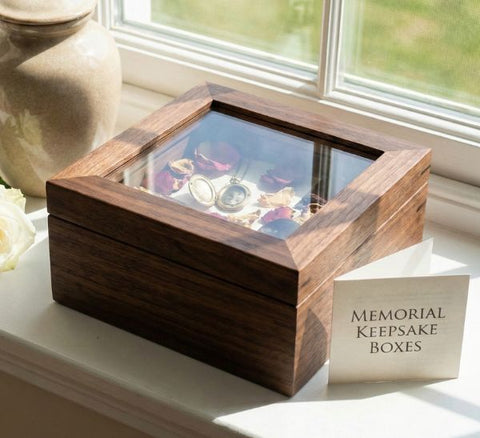
Memorial Keepsake Boxes: Personalized Memory Boxes to Honor Loved Ones
Personalized memorial keepsake boxes engraved with their name and dates, 15 ideas for what to put inside, and how to...
Read more ›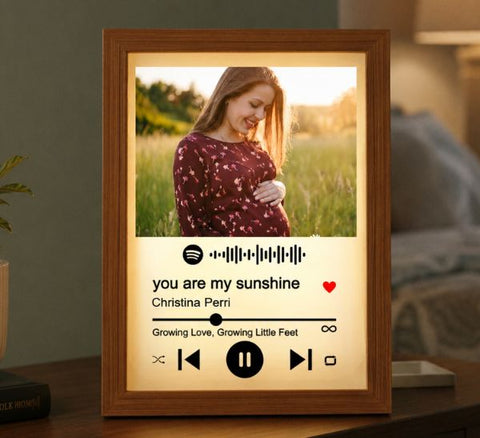
Baby Shower Gifts for the Mom (Not the Baby): 13 Personal Ideas
Baby shower gifts for the mom, not the baby. Personalized keepsakes, jewelry, and self-care gifts she'll keep using long after...
Read more ›
23 Unforgettable Valentine's Day Gift Basket Ideas She'll Adore
Skip the clichés. Send a hand-picked Valentine's Day Gift Basket for her filled with luxury treats they'll actually love. Shop...
Read more ›